When it comes to sanding and grinding, not all abrasive grains behave the same way. The way a grain wears directly impacts cut rate, finish quality, and overall product life. Understanding these differences can help you choose the right abrasive for the job—and get better results with less effort.
Let’s break down how the most common grain types perform over time.
Aluminum Oxide (AO): Consistent and Predictable
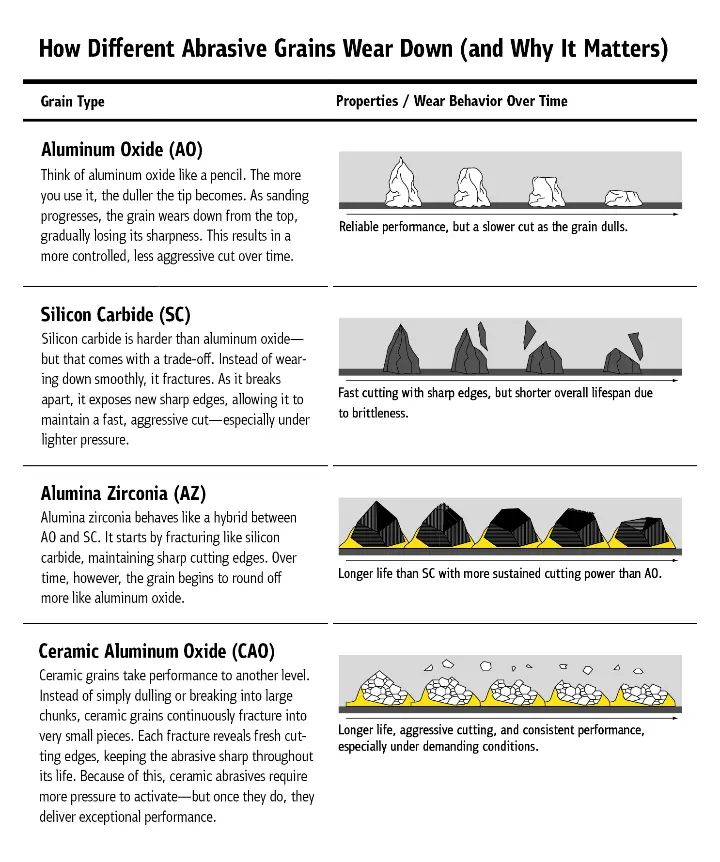
Think of aluminum oxide like a pencil. The more you use it, the duller the tip becomes.
As sanding progresses, the grain wears down from the top, gradually losing its sharpness. This results in a more controlled, less aggressive cut over time.
Best for:
- General-purpose sanding
- Applications where a consistent finish is important
- Materials like mild steel and wood
What to expect:
Reliable performance, but a slower cut as the grain dulls.
Silicon Carbide (SC): Sharp but Brittle
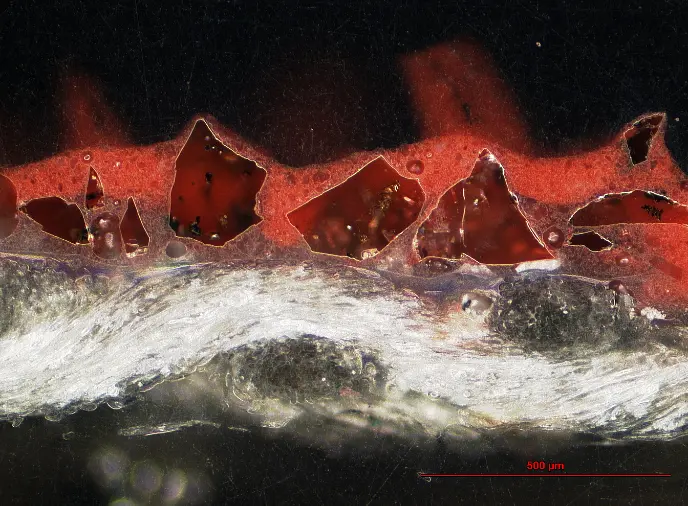
Silicon carbide is harder than aluminum oxide—but that comes with a trade-off.
Instead of wearing down smoothly, it fractures. As it breaks apart, it exposes new sharp edges, allowing it to maintain a fast, aggressive cut—especially under lighter pressure.
Best for:
- Glass and ceramics
- Light-pressure applications
- Fine finishing
What to expect:
Fast cutting with sharp edges, but shorter overall lifespan due to brittleness.

Alumina Zirconia (AZ): The Best of Both Worlds
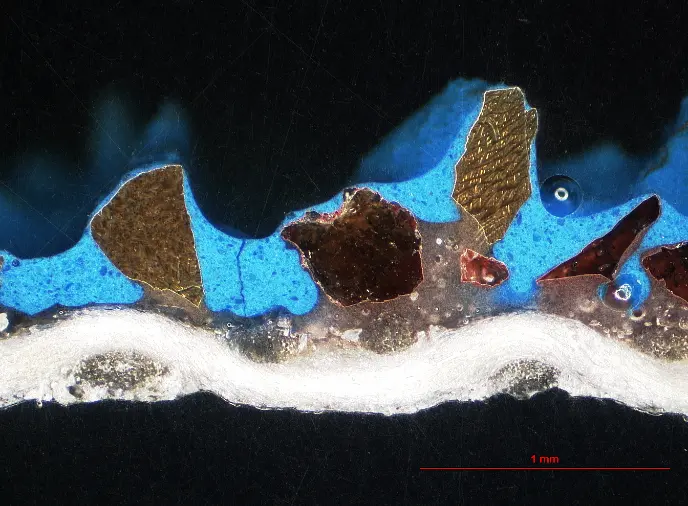
Alumina zirconia behaves like a hybrid between AO and SC.
It starts by fracturing like silicon carbide, maintaining sharp cutting edges. Over time, however, the grain begins to round off more like aluminum oxide.
Best for:
- Heavy stock removal
- Stainless steel and tougher metals
- High-pressure applications
What to expect:
Longer life than SC with more sustained cutting power than AO.
Ceramic Aluminum Oxide (CAO): Self-Sharpening Powerhouse
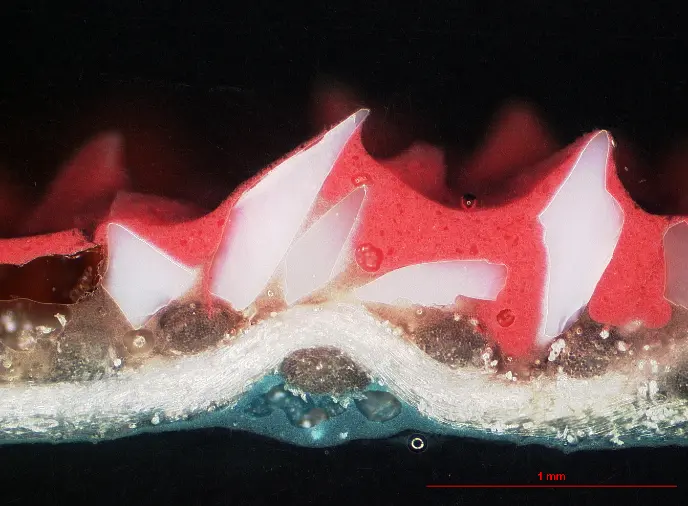
Ceramic grains take performance to another level.
Instead of simply dulling or breaking into large chunks, ceramic grains continuously fracture into very small pieces. Each fracture reveals fresh cutting edges, keeping the abrasive sharp throughout its life.
Because of this, ceramic abrasives require more pressure to activate—but once they do, they deliver exceptional performance.
Best for:
- High-pressure grinding
- Industrial and production environments
- Hard metals like stainless steel and alloys
What to expect:
Long life, aggressive cutting, and consistent performance—especially under demanding conditions.
Why Grain Wear Really Matters
Choosing the right abrasive isn’t just about the material—it’s about how the grain performs over time.
- Need consistency? Go with aluminum oxide.
- Need sharpness under light pressure? Silicon carbide is your answer.
- Need durability and power? Alumina zirconia or ceramic is the way to go.
The right grain can improve efficiency, reduce waste, and deliver a better finish—making a noticeable difference in both performance and cost.